Tempo sets the feel
BPM does more to the body than any other single choice. State a number — “72 BPM” is unambiguous where “slow” is not.
Read more about TempoMost free beat maker tools are step sequencers — you get a grid, a handful of stock drum samples, and however much time you are prepared to spend nudging hi-hats. This one starts from a sentence. Describe a boom bap beat at 90 BPM with a dusty break and filtered soul keys and you get exactly that, arranged and mixed, in about a minute. It is an online beat maker, so nothing installs, and it is a beat generator rather than a loop pack, so the beat is yours rather than one thousands of other people also downloaded.
In short
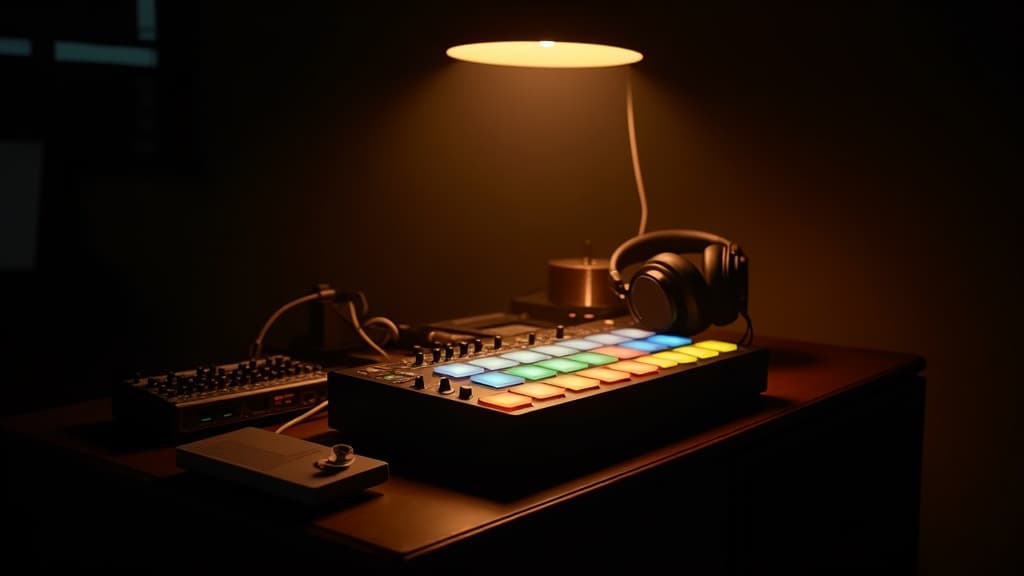
What this beat maker produces
Name four things and the beat maker has enough to work with: the subgenre, the tempo, the drum character and the melodic element. "Boom bap, 92 BPM, dusty swung break, filtered soul piano sample, upright bass" is a complete brief. Generate, listen, and change one thing at a time — swapping the piano for a guitar loop while keeping the tempo and the drums tells you what that one decision did. Most people reach a beat they want to rap over within three or four attempts, which is faster than programming one from scratch and far faster than searching a sample library for something uncleared.
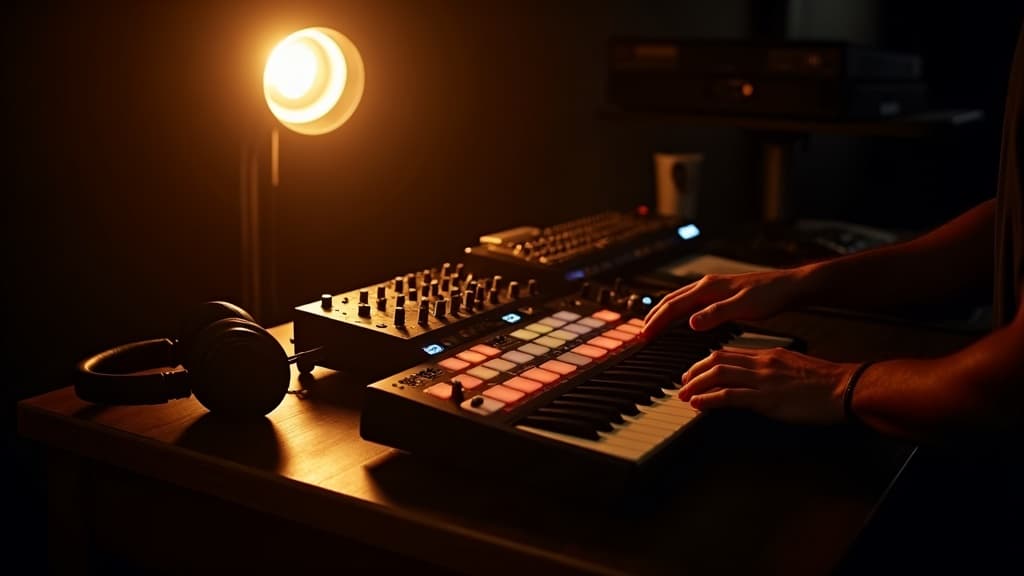
The subgenres are tempo and drum decisions before they are anything else. A rap beat maker brief at 85 to 95 BPM with swung sampled drums gives you boom bap; the same request at 130 to 150 with rolling hi-hats and gliding 808s is a trap beat maker brief; near 140 with sliding 808s and off-grid hats is drill. Lo-fi is boom bap with the top end rolled off and tape wobble added. Naming the subgenre alone leaves the model to guess the tempo, so state both — it is the single highest-value edit you can make to a beat prompt.
The reason producers hesitate over a free beat maker or an online beat maker is rarely the sound; it is what happens if the track does well. A beat built from an uncleared sample is a liability the moment it earns money, and a beat downloaded from a shared pack is one thousands of other people are also releasing. Generated beats have neither problem: nothing is lifted from an existing recording, and the beat is unique to the prompt that produced it. Downloads carry no watermark, including on the free tier, and commercial rights are stated per plan.
Sampled-sounding drums
Trap beats at 130–150 BPM with rolling hi-hats and gliding 808 bass
Menacing melodies
Tape wobble and vinyl crackle
Three ways in
Say what you want in a sentence — genre, tempo, mood, instruments — and hear it back arranged and performed.
Browse prompts
Who it's for
The craft
Most of what separates a usable track from a demo is decided before you press generate.
BPM does more to the body than any other single choice. State a number — “72 BPM” is unambiguous where “slow” is not.
Read more about Tempo
A chorus lands because the verse before it was smaller. Ask for a sparse first verse and the arrangement gains somewhere to go.
Read more about Song structure
Naming a delivery — breathy, belted, spoken — moves the performance further than naming a genre ever does.
Read more about Timbre| Style | Tempo and drums |
|---|---|
| Boom bap | 85–95 BPM. Swung, dusty break with space between the hits. |
| Trap | 130–150 BPM felt as half time. Hi-hat rolls, long 808 glides. |
| Drill | ~140 BPM. Sliding 808s, off-grid hats, sparse melody. |
| Lo-fi | 70–90 BPM. Soft drums behind the beat, highs rolled off. |
| Drumless | Any tempo. Melody and bass only, for writing or layering. |
Beat maker is the head term at 72,000 searches a month, and it fragments in every direction: a free beat maker, beat maker free, beat maker online, beat maker online free, an online beat maker, a rap beat maker, a drum beat maker, a music beat maker, a song beat maker, a piano beat maker, a best beat maker comparison. The instrument-named ones are worth reading literally — a piano beat maker means a beat built around a piano loop, a drum beat maker means drums with little else — and both are a sentence in the prompt rather than a separate tool.
A beat maker is a tool for building the instrumental behind a song — the drums, the bass and a melodic hook, without a lead vocal. Traditional beat makers give you a step sequencer and a sample library; this one takes a written description and produces the finished beat.
Describe the beat you want — subgenre, tempo in BPM, drum character and the melodic element — then generate. The free tier produces complete beats and downloads them without a watermark, so you can judge the output rather than a preview.
Yes, there is a free tier with unwatermarked downloads. Paid plans raise how many beats you can make, unlock longer runtimes and higher-resolution audio, and carry clearer commercial terms for release.
Boom bap sits at 85 to 95 BPM, trap at 130 to 150 felt as half time, and drill near 140. State a number rather than a mood — models honour explicit tempos far more reliably than words like "hard" or "slow".
That is what they are for. Ask for a beat with no lead melody in the vocal range if you intend to write over it, so nothing competes with your voice in the midrange.
No. Nothing is lifted from an existing recording, so there is no sample to clear. That is the practical difference from building a beat around a loop you found — an uncleared sample becomes a problem exactly when the track starts earning.
You can release and monetise them under the commercial terms of your plan, which are shown in the app before you generate. Selling beats to other artists is a licensing question about your plan tier, so read the terms if that is the business you are in.
You can separate any beat into stems with the free stem splitter, which runs in your browser without uploading the file. That gives you the drums and the melodic parts separately for rebalancing or rebuilding.
Use a beat generator when you need a usable beat quickly to write over or score something. Use a DAW when the beat itself is the work and you need control over individual notes. Generating an arrangement and then splitting it into stems is a common middle path.
Space, mostly. Amateur beats are usually too busy — every bar filled, every instrument competing. Asking for a sparse arrangement with room in the midrange does more for how finished a beat sounds than any amount of added production.
More ways to make music
Every surface writes to the same session — start anywhere.
A beat maker builds the instrumental a track is rapped or sung over — drums, bass, and a melodic hook, with no lead vocal. This AI beat maker works from a written description instead of a sample library: name the style, the tempo in BPM and the drums you want, and it produces a finished beat you can download without a watermark and use commercially.