AI Study Music Generator
Music that supports concentration instead of competing with it.
In short
What studying music needs
- Typical length
- 25–120 min
- Tempo
- 60–90 BPM
- Vocals
- None
- Dynamics
- Consistent
- Palette
- Small, unchanging
Scoring for studying
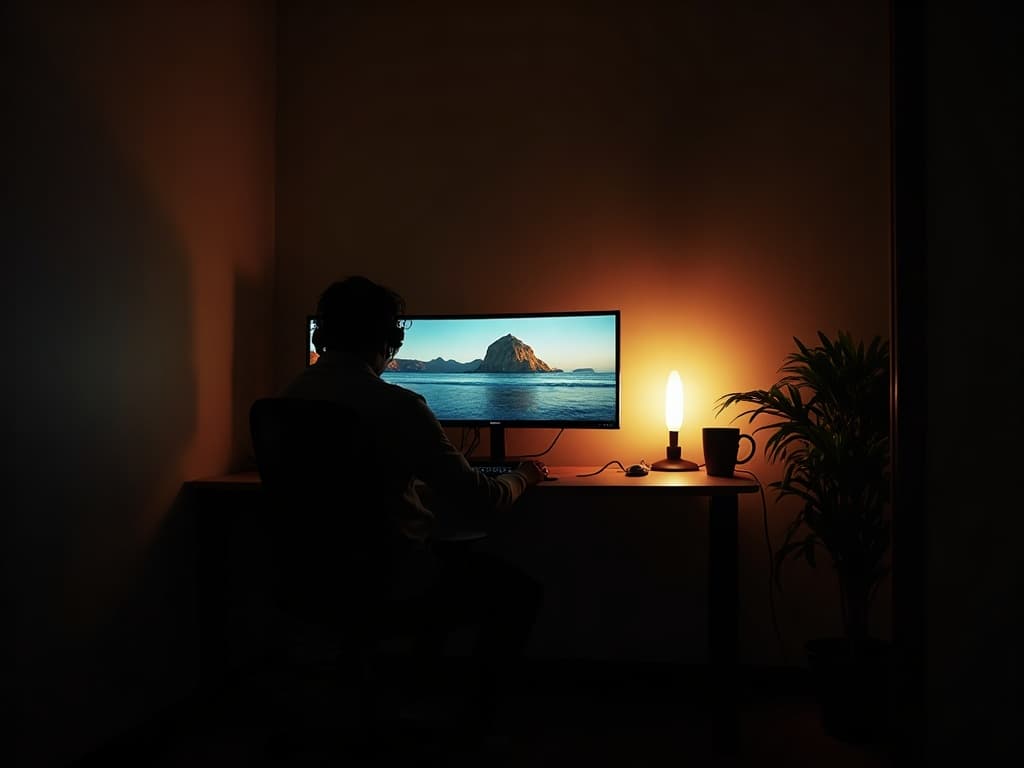
The research on whether music helps you study is genuinely mixed, and the honest summary is that it depends on the task and the music. Anything with lyrics competes for the same language processing you are using to read or write, which is why instrumental music consistently outperforms songs for verbal work. For repetitive or mechanical tasks the effect reverses slightly — music helps by keeping arousal up during work that is boring rather than demanding. What suits studying is steady and unremarkable: a consistent tempo between 60 and 90 BPM, a limited palette that does not introduce new instruments halfway through, and dynamics flat enough that you never look up. Lo-fi became the default study genre for exactly these reasons rather than by accident. Generate long rather than short, so you are not interrupted by a track change every three minutes, and keep the volume low enough that it sits under the sound of your own thinking rather than over it.
What usually goes wrong with studying music
The specific ways music for this brief fails, and what to ask for instead.
Language competes directly with reading and writing
Which pull attention towards memory and away from the page
Short pieces that end every three minutes and interrupt the session
Sudden instrument changes or dramatic builds partway through

Who needs it
Who generates studying music


A studying music prompt to start from
Lo-fi study beat, 72 BPM, F major. Soft Rhodes chords, brushed drums, warm tape hiss, no vocals, no builds, consistent throughout, 45 minutes.
Change the tempo first — it moves the result further than any other word. More prompts to copy.
Related
Royalty-free music for other platforms and uses
More briefs
More royalty-free AI music by use case
Every brief has its own tempo, length and failure mode.







Royalty-free studying music: what people search for
Searched as study music, music to study to, music to study by, classical study music, focus music for studying and concentration music. The classical ordering is a genuinely different request — baroque and solo piano rather than lo-fi — and it comes from the widely repeated claim that classical music aids concentration, which the research supports far more weakly than the search volume suggests.
Music for studying — questions people ask
Does music help you study?
The honest answer is that it depends on the task. Anything with lyrics competes for the same language processing you use to read and write, so instrumental consistently outperforms songs for verbal work. For repetitive tasks the effect reverses slightly.
What is the best music for studying?
Instrumental, rhythmically steady and emotionally neutral — 60 to 90 BPM, a small unchanging palette, and dynamics flat enough that you never look up. Lo-fi became the default study genre for exactly these reasons.
Why is lo-fi so popular for studying?
It ticks every box the task needs: no lyrics, consistent tempo, a limited palette, no dramatic changes, and a noise floor that masks background sound. It became the default by fitting the brief rather than by accident.
Should study music have lyrics?
No, for anything involving reading or writing. Lyrics use the same language processing as the work, which is the single most consistent finding in this area.
Does classical music make you smarter while studying?
The 'Mozart effect' as popularly described does not hold up. Classical works well for study for ordinary reasons — it is instrumental and structurally consistent — not because it raises intelligence.
How long should a study playlist be?
Long enough to cover a full session without a track change. An interruption every three minutes costs more attention than most people realise, so generate 45 to 120 minutes as one piece.
AI Study Music Generator
Music that supports concentration instead of competing with it.